

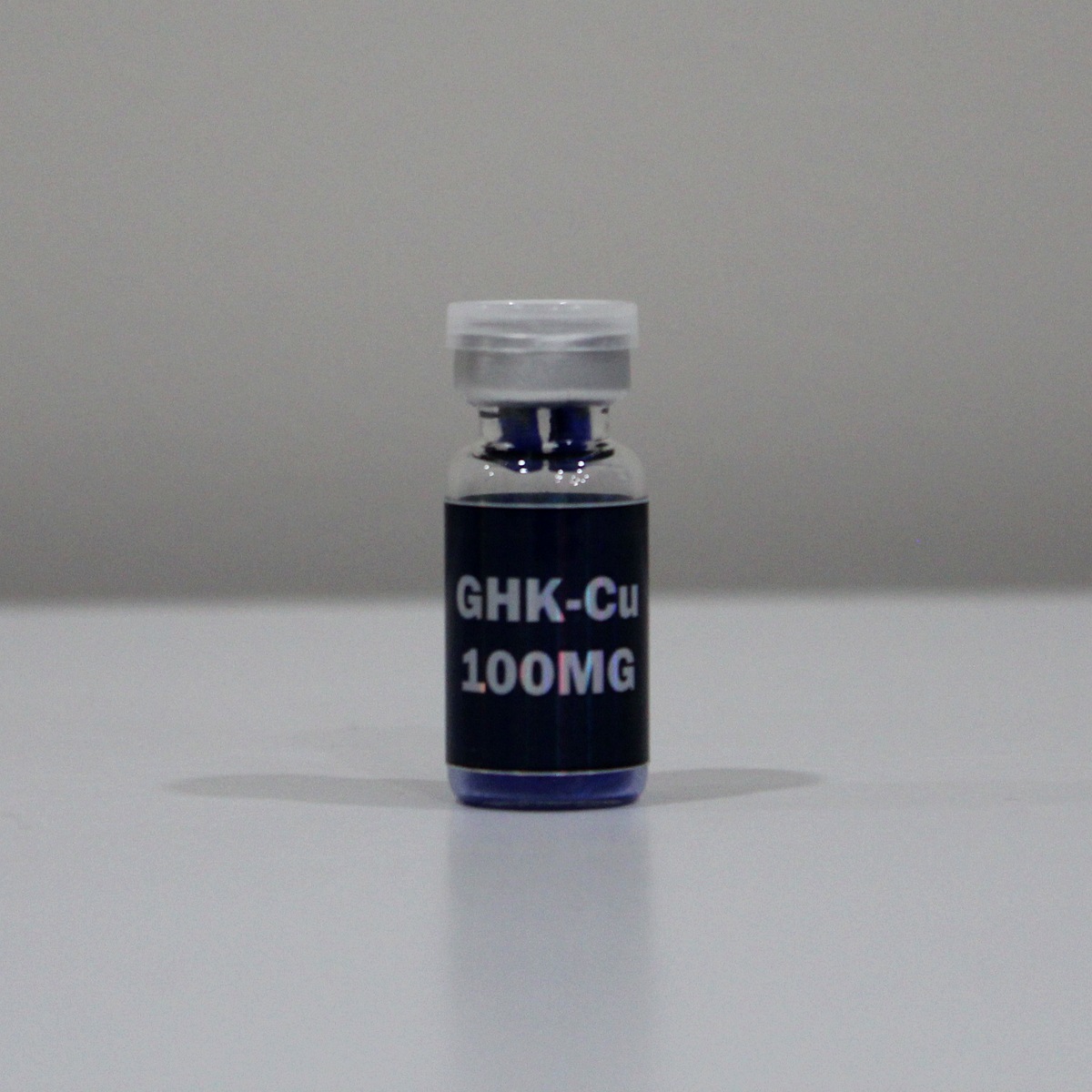
GHK-Cu 100mg Copper Peptide for Advanced Skin and Cellular Research
Meta Description
Explore GHK-Cu 100mg copper peptide, a research compound studied for cellular signaling, skin biology, and regenerative processes. For laboratory use only.
Introduction
GHK-Cu is one of the most widely studied peptides in cellular and skin-related research. Known as a copper-binding peptide, it plays a key role in biological signaling pathways that are involved in tissue remodeling, cellular communication, and regenerative processes.
GHK-Cu 100mg copper peptide is commonly used in laboratory settings to investigate how peptides interact with copper ions and influence cellular activity. Its stability and broad range of research applications make it a valuable compound in modern peptide science.
This article explores what GHK-Cu is, how it works, and why it is an important focus in research environments.
What Is GHK-Cu?
GHK-Cu (Glycyl-L-Histidyl-L-Lysine Copper) is a naturally occurring tripeptide that binds with copper ions to form a biologically active complex. It was originally identified in human plasma and has since been studied extensively for its role in cellular signaling.
In research environments, GHK-Cu 100mg copper peptide is studied for:
- Cellular communication pathways
- Tissue remodeling processes
- Skin biology and extracellular matrix research
- Copper ion transport and utilization
The 100mg format is commonly used in laboratory experiments that require consistent and measurable peptide concentrations.
Mechanism of Action (How GHK-Cu Works)
GHK-Cu functions by binding copper ions and delivering them to cells, where they participate in various biological processes.
bi Ion Transport
Copper is an essential trace element involved in enzymatic activity. GHK-Cu acts as a carrier molecule, helping transport copper to cells for research on metabolic and cellular functions.
Cellular Signaling
GHK-Cu is studied for its role in activating signaling pathways related to:
- Cellular growth and differentiation
- Extracellular matrix regulation
- Gene expression modulation
Tissue and Skin Research
In laboratory models, GHK-Cu is frequently analyzed for its influence on:
- Collagen-related pathways
- Skin structure and elasticity research
- Cellular regeneration processes
Why GHK-Cu Is Important in Research
GHK-Cu has become a key compound in peptide science due to its versatility and biological relevance.
Cellular Research Applications
Researchers use GHK-Cu 100mg copper peptide to study:
- Cellular repair signaling
- Protein synthesis pathways
- Gene expression patterns
Skin and Extracellular Matrix Studies
It is widely used in research focused on:
- Collagen and elastin pathways
- Skin tissue modeling
- Matrix remodeling processes
Copper-Dependent Biological Processes
Because copper is essential in many enzymatic reactions, GHK-Cu helps researchers understand how copper influences biological systems.
GHK-Cu 100mg in Laboratory Settings
The 100mg format is commonly selected for research due to its flexibility in experimental design.
Researchers use this format for:
- Controlled dosing in cellular studies
- Long-term experiments
- Tissue and regeneration research models
- Biochemical pathway analysis
Consistency in peptide concentration is essential for reproducible results.
Importance of Quality in Peptide Research
In peptide-based experiments, quality directly impacts data accuracy.
When sourcing GHK-Cu 100mg copper peptide, researchers prioritize:
- ≥98% purity standards
- Third-party COA verification
- Proper storage and handling
- Sterile manufacturing conditions
High-quality peptides help ensure reliable and repeatable research outcomes.
Storage and Handling Guidelines
To maintain peptide stability:
- Store in a cool, dry environment
- Avoid repeated freeze-thaw cycles
- Reconstitute only when required
- Use sterile laboratory procedures
Proper handling preserves molecular integrity and supports accurate research.
Compliance and Research Use Only Notice
GHK-Cu 100mg copper peptide is intended strictly for laboratory research use only.
It is:
- Not approved for human consumption
- Not intended for medical or therapeutic use
- Restricted to controlled research environments
All use must comply with applicable research regulations.
Frequently Asked Questions
What is GHK-Cu used for in research?
It is studied for cellular signaling, skin biology, and copper-related metabolic pathways.
What does the 100mg refer to?
It refers to the total peptide quantity per vial used in laboratory experiments.
Why is GHK-Cu widely studied?
Because of its role in copper transport and cellular signaling processes.
Is GHK-Cu safe for human use?
No, it is strictly intended for research purposes only.
Conclusion
GHK-Cu 100mg copper peptide is a highly valuable compound in cellular and skin-related research. Its ability to transport copper and influence biological signaling pathways makes it an essential tool for studying complex physiological systems.
As peptide science continues to evolve, GHK-Cu remains a key focus for researchers investigating cellular communication, tissue processes, and biochemical pathways.
Explore high-purity GHK-Cu 100mg copper peptide at Palmetto Peptides Lab for laboratory research purposes only.
kelly –
Good for skin care