
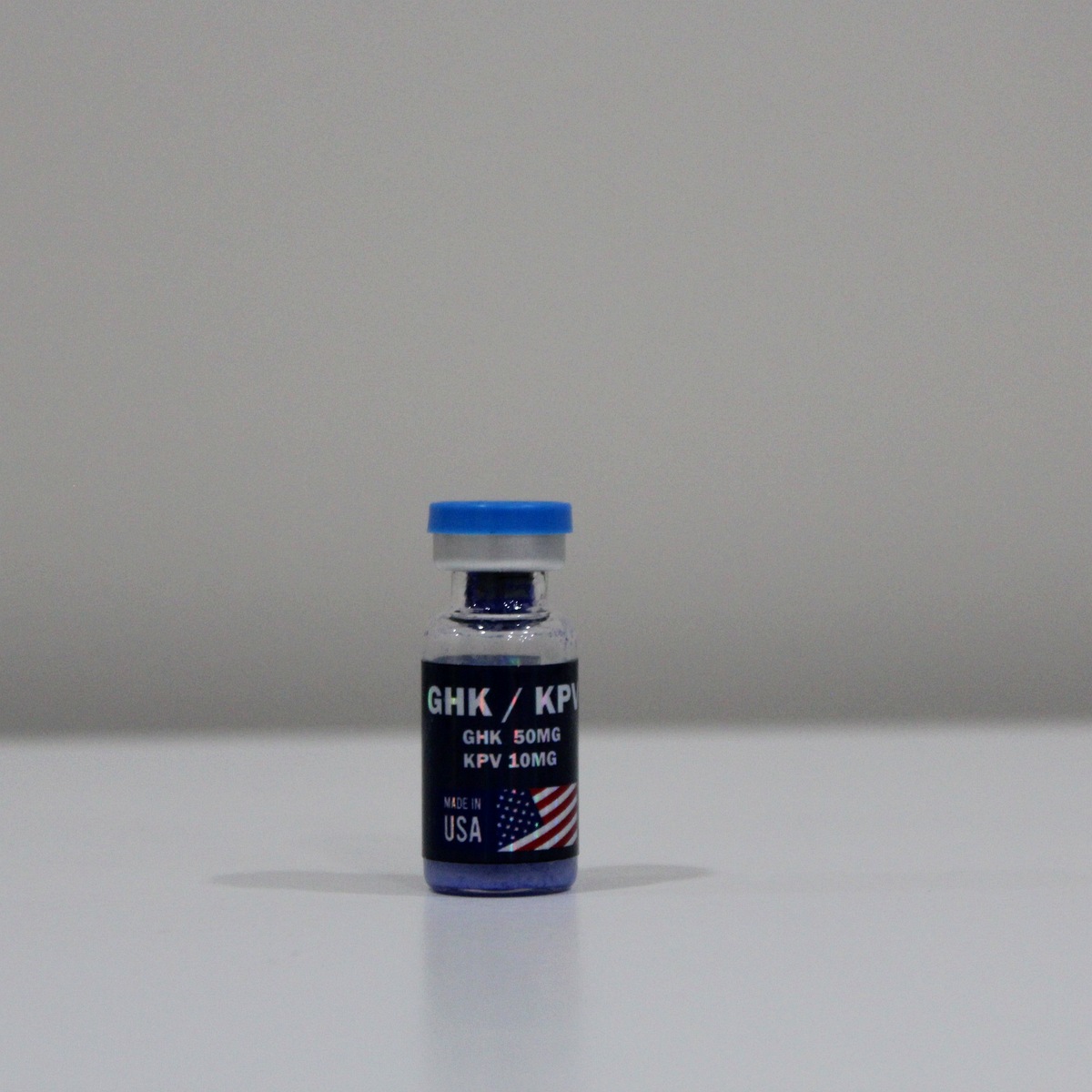
GHK-Cu + KPV 50mg/10mg Research Peptide Blend for Advanced Cellular and Inflammation Research
Meta Description
Explore GHK-Cu + KPV 50mg/10mg research peptide blend, studied for cellular signaling, skin biology, and inflammation pathways. For laboratory use only GHK-Cu + KPV 50mg/10mg Research Peptide Blend.
Introduction
The GHK-Cu + KPV 50mg/10mg Research Peptide Blend is a specialized combination designed for advanced laboratory research focused on cellular signaling, inflammation pathways, and tissue biology.
This blend combines two well-studied peptides—GHK-Cu and KPV—each known for their biological activity in different but complementary systems. When studied together in controlled research environments, they provide valuable insight into how peptides influence cellular communication and inflammatory regulation.
The 50mg/10mg ratio is commonly used in experimental peptide research to maintain consistency and allow structured study of multi-pathway biological effects.
What Is the GHK-Cu + KPV Peptide Blend?
This research peptide blend combines:
- GHK-Cu (50mg) – a copper-binding tripeptide studied for cellular signaling and tissue biology
- KPV (10mg) – a tripeptide fragment derived from alpha-melanocyte-stimulating hormone studied for inflammatory pathway research
Together, they are used in laboratory settings to explore:
- Cellular communication mechanisms
- Inflammation-related biological pathways
- Tissue response and regeneration processes
- Immune signaling interactions
This combination is widely studied due to its complementary biological activity in research models.
Individual Components Explained
H3: GHK-Cu (50mg)
GHK-Cu is a naturally occurring copper peptide studied for its role in:
- Copper ion transport and utilization
- Cellular signaling pathways
- Gene expression modulation
- Skin and extracellular matrix research
It is widely used in studies focusing on cellular repair and biological regulation.
KPV (10mg)
KPV is a short peptide fragment derived from alpha-MSH and is studied for:
- Inflammatory response pathways
- Immune signaling research
- Gut and epithelial tissue models
- Cellular stress response mechanisms
Its small structure makes it highly useful in targeted biological research.
Why Researchers Study This Combination
The GHK-Cu + KPV blend is used in laboratory environments to examine how copper peptides and anti-inflammatory peptides interact within biological systems.
Cellular Signaling Research
Researchers use this blend to study how cells communicate under different biological conditions, including stress and repair signaling pathways.
Inflammation Pathway Studies
KPV is commonly analyzed for its role in inflammatory signaling, while GHK-Cu contributes to broader cellular regulation. Together, they help researchers model complex inflammatory responses.
Tissue Biology and Regeneration Models
This blend is also used in research exploring:
- Tissue repair mechanisms
- Cellular regeneration processes
- Extracellular matrix interactions
Importance of the 50mg / 10mg Ratio
The structured ratio in this blend ensures consistent research conditions:
- GHK-Cu (50mg): primary focus on cellular signaling and copper biology
- KPV (10mg): targeted inflammatory and immune pathway research
This balance allows researchers to observe multi-pathway interactions in a controlled setting.
Laboratory Research Applications
The GHK-Cu + KPV peptide blend is commonly used in research focusing on:
- Cellular communication studies
- Inflammation response modeling
- Skin and tissue biology research
- Immune system signaling pathways
- Regenerative biology experiments
Its dual-peptide structure makes it valuable for multi-system biological analysis.
Importance of Quality in Peptide Research
In scientific research, peptide quality directly affects experimental accuracy and reproducibility.
Researchers sourcing this blend prioritize:
- ≥98% purity standards
- Third-party COA verification
- Sterile manufacturing conditions
- Proper peptide stabilization
High-quality materials ensure reliable and consistent research outcomes.
Storage and Handling Guidelines
To maintain peptide stability in laboratory environments:
- Store lyophilized powder in a cool, dry place
- Avoid repeated freeze-thaw cycles
- Reconstitute only when needed for experiments
- Use sterile laboratory techniques
Proper handling ensures molecular integrity and consistent research performance.
Compliance and Research Use Only Notice
The GHK-Cu + KPV 50mg/10mg Research Peptide Blend is intended strictly for laboratory research purposes only.
It is:
- Not approved for human consumption
- Not intended for medical or therapeutic use
- Restricted to qualified research environments
All use must comply with applicable research regulations and institutional guidelines.
Frequently Asked Questions
What is the GHK-Cu + KPV blend used for?
It is used in laboratory research studying cellular signaling, inflammation pathways, and tissue biology.
Why combine GHK-Cu and KPV?
Because they target different biological systems, allowing for multi-pathway research analysis.
What does the 50mg/10mg ratio mean?
It refers to the peptide distribution used for structured experimental design.
Is this peptide blend for human use?
No, it is strictly for laboratory research use only.
Conclusion
The GHK-Cu + KPV 50mg/10mg Research Peptide Blend is a powerful combination used in advanced laboratory research focused on cellular signaling, inflammation pathways, and tissue biology.
By combining a copper-binding peptide with an inflammation-related peptide, researchers can study complex biological interactions in a controlled environment.
Explore high-purity GHK-Cu + KPV research peptide blend at Palmetto Peptides Lab for laboratory research purposes only.
lorry –
Top quality